From the C&G training journal. Dates and prices in this article reflect current pricing. Check current class dates and course requirements before registering.
Most pistol coaching sessions feel rushed and generic. You book an hour, you get a lane, and you spend half of it wondering whether anyone is actually watching what you are doing. A private pistol coaching session at C&G Solutions is built the other way around: one student, one instructor, and a plan that exists before you ever walk onto the line.
Here is what that hour actually looks like, from the first conversation to the last drill, so you know exactly what you are signing up for.
Before the session: the conversation that shapes it
Private pistol coaching starts before the range. When you book, we ask three questions: what you shoot, what you want to fix, and when you next need to be competent rather than merely present. Those answers decide everything that follows.
A new permit holder who has never fired a shot and a retired officer who wants to tighten their draw from concealment are not going to run the same hour. The first may spend most of it on grip, sight alignment and the mechanics of a safe load and unload. The second may spend it on presentation speed, follow-through and the specific standard their agency or qualification course requires.
Tell us honestly where you think you are. Nobody is graded on the intake call, and an accurate starting point is what makes the hour worth the money.
What to bring to a private pistol coaching session
If you have your own pistol, bring it. You train on the firearm you actually carry, which is the whole point. Bring your holster and magazine pouches if you have them, your eye and ear protection, and at least a hundred rounds. Two hundred is better if there is more than one thing you want to work on.
No pistol yet, or not sure yours is the right one? Say so when you book. We can supply a rental firearm for the session at a higher rate, and it is a far better use of an hour than buying a pistol on someone else’s recommendation and learning what you do not like about it afterwards.
Leave the ego at home and bring the questions. Sessions move fastest when a student says, “I do not understand why this keeps happening” out loud.
The first fifteen minutes of a private pistol coaching session
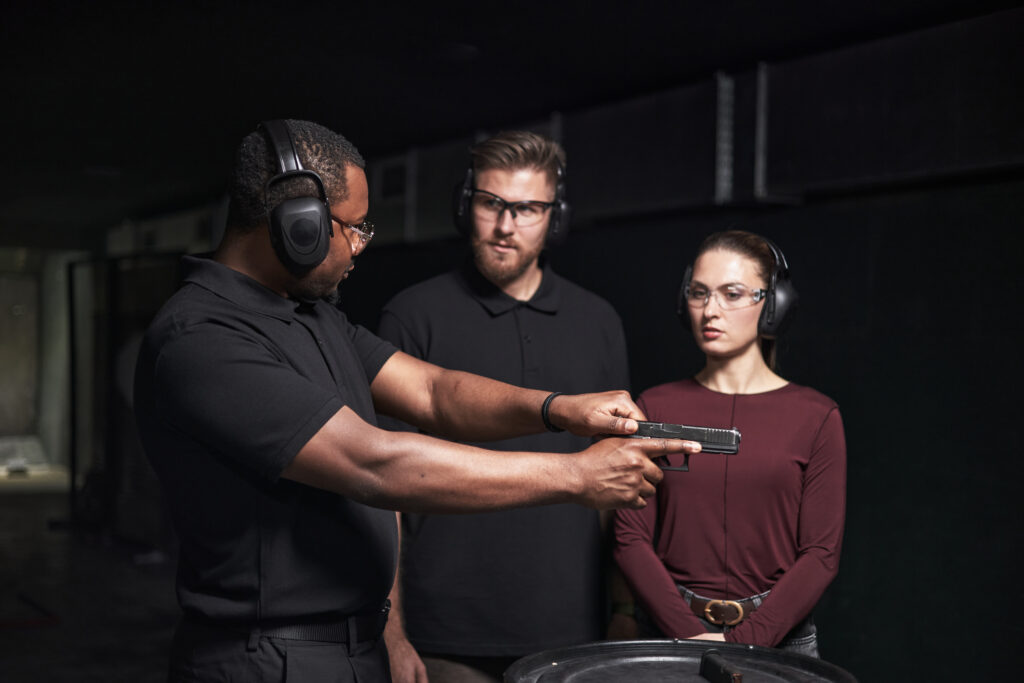
The session opens with a safety brief and a short assessment. You will shoot a group at a known distance, draw a few times, and run a simple drill. Nothing is scored and nothing is recorded for posterity. The point is diagnostic.
Private pistol coaching is how you find that out fast. An instructor watching a student for ten minutes can usually see the root of a problem that has frustrated that student for a year. A group that lands low and left is often a trigger-press issue, not a sighting issue. A group that is wide open is usually a grip and recoil-management issue, not a breathing issue. Finding that out on the first visit saves months of practicing the wrong thing.
This is the part of private pistol coaching that group classes cannot replicate. On a twenty-person line an instructor sees each shooter for a minute or two. In a private session you are the only thing being watched.
The middle of the hour: one skill at a time
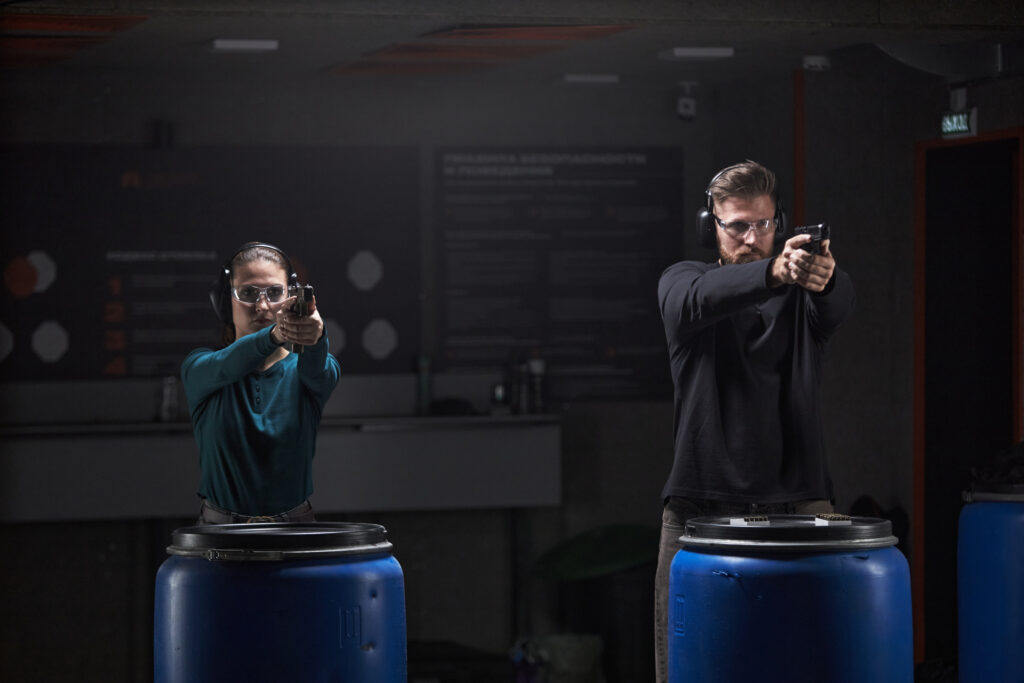
From the assessment we pick the one or two things that will make the biggest difference and work them deliberately. Expect a lot of repetition and a lot of correction, and expect to be asked to slow down.
- Grip and recoil management: building a grip that returns the pistol to the same place instead of fighting it back down between shots.
- Trigger press: pressing the trigger straight to the rear so the sights stay where you put them. Most flinching and most low-left groups disappear when this is corrected properly.
- Draw and presentation: a clean, repeatable draw from concealment, including clearing the garment safely and getting the pistol on target without hunting for the sights.
- Sights and optics: picking up iron sights consistently, or finding the dot quickly if you have moved to a red dot and are still losing it under recoil.
- Live-fire qualification: working directly toward the state’s live-fire standard for a carry license or a renewal, so qualification day is a formality rather than a gamble.
Because the hour belongs to one student, private pistol coaching can be sequenced deliberately. We do not attempt everything in one visit. Two skills improved properly in an hour beat six skills sampled and abandoned.
The last ten minutes: a practice plan to take home
The session closes with a summary of what changed, what is still inconsistent, and two or three drills to run on your own before the next visit. That written-down plan is the part students tell us they value most from private pistol coaching, because it turns an hour of instruction into weeks of useful practice.
Practice without feedback hardens whatever you are already doing, good or bad. That is the argument for private pistol coaching in a sentence: a coach interrupts the loop before a bad habit becomes permanent.
What private pistol coaching costs in New York
Coaching is billed by the hour, and the rate depends on what you bring:
- $100 per hour for civilians training with their own pistol.
- $150 per hour if a rental firearm is supplied for the session.
- $50 per hour for law-enforcement coaching, active or retired.
There is no package and no membership. One hour is enough to diagnose a specific problem; several hours, spaced out with practice in between, are what build a skill. Sessions run at our affiliated range, and our Oceanside classroom is classroom space only. If your goal is a New York carry license, the NYS 18-Hour Concealed Carry Course is $350 and still accepts a $100 deposit to hold your seat in Oceanside or Whitestone.