The NYS 18-hour pistol course is the required training for your first New York State concealed-carry class, and it's normal to have questions going in: Do you need to own a handgun first? Will you be expected to know firearm terminology? What happens during the live-fire portion?
The short answer: the course is designed to teach required safety, legal, and practical fundamentals. You do not need to arrive as an experienced shooter. You do need to come ready to listen, ask questions, and treat the responsibility seriously.
What does “18-hour course” mean?
New York’s concealed-carry firearm safety requirement includes 16 hours of in-person classroom instruction and 2 hours of live-fire training. The NYS 18-hour pistol course is intended to cover more than basic marksmanship. It addresses firearm safety, laws, secure storage, situational awareness, conflict de-escalation, and safe handling.
The New York State Police and DCJS minimum standards set out the required curriculum and proficiency assessments. New York's concealed-carry law FAQ explains who must complete the training.
The class is not simply a way to collect a certificate. Its purpose is to help you understand the responsibilities that come with seeking a concealed-carry license, and to give you a structured foundation for safe, informed decisions.
Do you need to own a handgun before class?
Not necessarily. Requirements for equipment and firearms in the NYS 18-hour pistol course can vary by provider and course session. Before class, ask the instructor what to bring and whether you should bring a personal firearm. Do not assume that you need to bring one, and do not bring a firearm or ammunition unless the instructor has specifically explained the requirements and safe procedures.
If you already own a handgun, tell the instructor you are new to training. That helps them give you clear direction about what is appropriate for the class and range. If you do not own one, say so when you register. Being upfront is better than guessing.
What happens in the classroom?
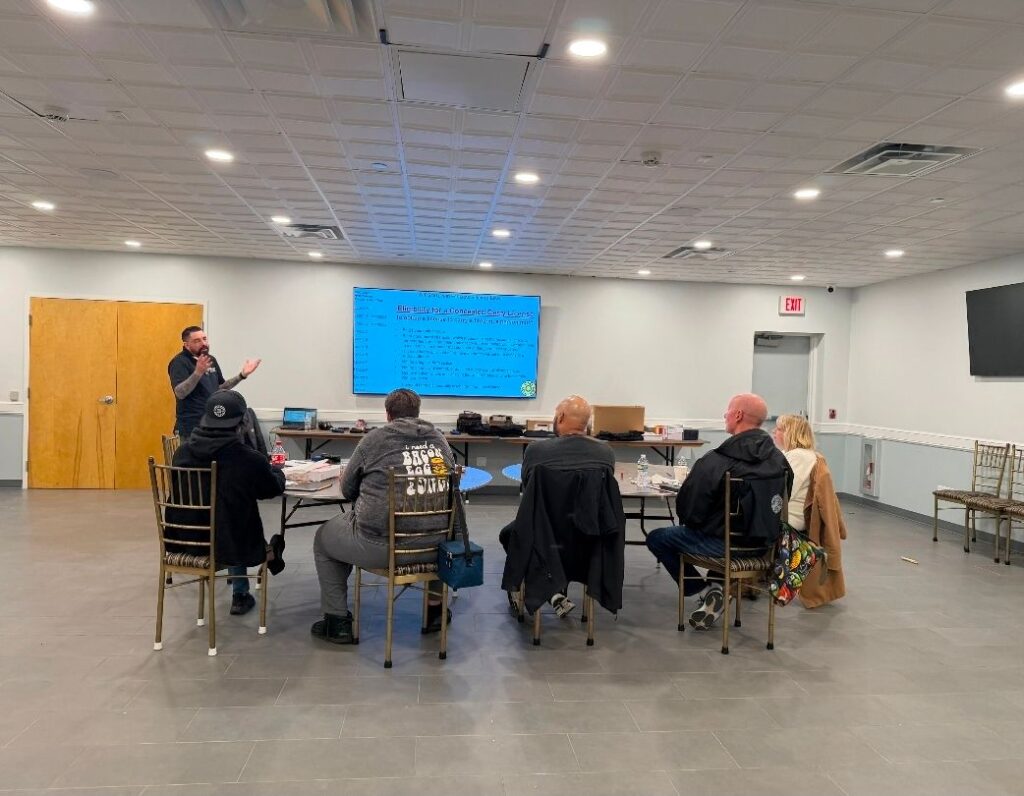
The classroom portion explains the principles you’ll need to understand before any live-fire work. You can expect to cover areas such as:
- Firearm safety: Safe handling, firearm and ammunition basics, cleaning and maintenance, and range rules.
- Secure storage and transportation: New York requirements and practical ways to prevent unauthorized access.
- New York and federal law: Legal requirements, restrictions, and responsibilities relevant to firearm possession and concealed carry.
- Situational awareness and concealment: Paying attention to your surroundings and understanding how firearm display and concealment can affect a situation.
- Conflict management and de-escalation: Recognizing options that may reduce tension and help you avoid escalating a conflict.
- Use of force: Legal considerations, including when deadly physical force may be justified and the duty to retreat where applicable.
- Marksmanship fundamentals: Stance, grip, sight alignment, sight picture, breathing, and trigger control.
The content can feel like a lot at first. You are not expected to absorb everything instantly. Take notes, ask for clarification, and focus on understanding the principles rather than memorizing phrases without context. These topics connect to real decisions: securing a firearm at home, responding calmly to conflict, and understanding that carrying a firearm brings legal and practical responsibilities.

What should you expect during live-fire training?
The live-fire portion of the NYS 18-hour pistol course is supervised practice and assessment, not a test of whether you are already an expert. The instructor will explain range rules, safe loading and unloading, dry firing, firearm condition checks, and the safe handling practices required for the course.
The state minimum standards include a live-fire proficiency assessment. Among other steps, the student demonstrates safe handling and fires five rounds at a target from four yards; at least four rounds must hit the target. The instructor will explain the commands and process before the assessment. Listen closely, ask questions before proceeding if something is unclear, and follow instructions exactly.
You’ll also be introduced to basic marksmanship. For example, sight picture means understanding how the sights appear in relation to your target. Trigger control means applying a deliberate, consistent press to the rear while maintaining your aim. There is no benefit to rushing. Safe, controlled performance matters more than trying to look experienced.
If you feel nervous, tell the instructor. Nervousness is not a reason to hide questions or move ahead before you understand an instruction. A calm, methodical approach is part of safe training.
Is there a written test?
Yes. The NYS 18-hour pistol course ends with a written proficiency test after the classroom instruction, per New York’s minimum standards. Students must achieve at least 80% correct answers. There is also a live-fire proficiency assessment.
Your best preparation for the NYS 18-hour pistol course is to attend the full course, take notes, participate, and ask questions when a subject is unclear. Treat the law and safety material as practical knowledge, not just test content. A passing score is important, but the deeper goal is knowing how to apply what you learned responsibly.
How should you prepare for your first class?
A little preparation can reduce stress and help you focus on the NYS 18-hour pistol course:
- Confirm the schedule and location. Check your registration information for the current class dates, start times, and instructions.
- Ask what to bring. Confirm identification, course materials, equipment, and any range requirements directly with the provider.
- Arrive ready to learn. Wear comfortable clothing suitable for a full training day and follow any specific clothing or footwear instructions from the instructor.
- Bring questions. Write them down if that helps you remember them.
- Avoid alcohol or impairing substances. Arrive rested, alert, and able to participate safely.
- Don’t bring unrequested firearms or ammunition. Follow the instructor’s directions about whether any equipment is needed and how it should be transported.
C&G Solutions conducts its NYS 18-hour course at our Oceanside classroom (3615 Oceanside Road, Oceanside, NY) or our Whitestone classroom (12-15 150th Street, Whitestone, NY), depending on the session. Classroom and live-fire locations can differ. Course schedules and specific student instructions can change, so check the current NYS 18-Hour Concealed Carry course page before attending.
What does completing the course mean?
Successful completion means you have met the course’s training and assessment requirements and can receive the relevant completion documentation. It does not guarantee that a licensing officer will issue a license. The course is one part of the application process, and licensing decisions and application instructions are handled by the appropriate authority.
If you have a question about application paperwork, deadlines, or local procedures, contact your licensing officer. Keep your course documentation and follow the instructions provided for your application.
A professional course should leave you with more than a certificate. It should help you understand what you know, what you still need to practice, and where to find authoritative guidance when a legal question comes up.
Start with questions, leave with a foundation
Your first class is an opportunity to build a responsible foundation, not a performance. You can be new, ask questions, and take the material one step at a time. The crucial part is treating safety, legal compliance, and continued learning as ongoing responsibilities.
For details about C&G Solutions' course, schedule, and registration, visit the course page. For additional beginner fundamentals, read the C&G Solutions New Shooters Guide. Defend with skill, Act with confidence.
Did you find this guide useful? Share it with someone preparing for their first concealed-carry class.