From the C&G training journal. Dates, prices and promotions mentioned in this article reflect its original publication. Check current class dates and course requirements before registering. Requirements and laws can change; confirm current instructions with the relevant licensing authority.
An NYS concealed carry course is the training requirement that sits between you and a carry license, and it is the part most applicants underestimate. The paperwork gets all the attention. The course is where you actually learn what New York expects you to know before it trusts you with a firearm in public: the law on deadly physical force, where you may and may not carry, how to draw without endangering yourself, and how to press the trigger to the rear under pressure instead of yanking it. At C&G Solutions we teach that course in our Oceanside and Whitestone classrooms, and this guide walks you through the whole path from eligibility to certificate to license.
What the NYS Concealed Carry Course Has to Cover
New York does not let an instructor improvise a curriculum. The state sets minimum standards for firearm safety training through DCJS, and the Concealed Carry Improvement Act requires every applicant for a “Carry Concealed” license to complete that standardized training. An NYS concealed carry course is therefore a fixed package, not a menu:
- 16 hours of classroom instruction covering firearm safety, storage, holster selection, conflict de-escalation, and the law governing the use of deadly physical force.
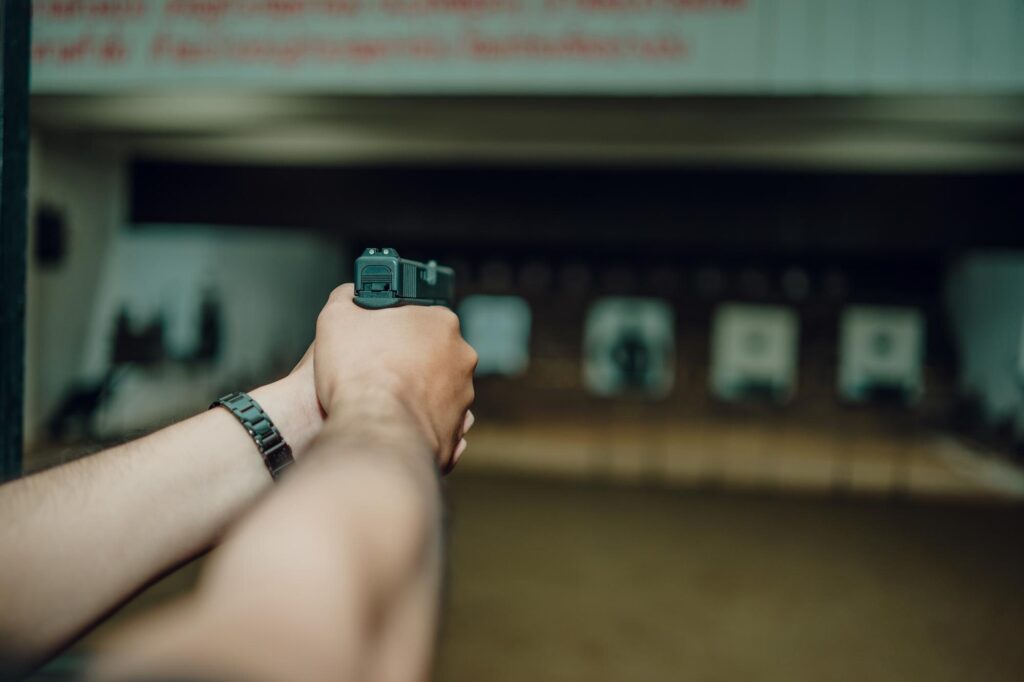
- 2 hours of live-fire training on the range, where you demonstrate safe handling and basic marksmanship in front of an instructor.
- A written exam and a live-fire qualification, both of which you must pass to receive your certificate of completion.
Our NYS concealed carry course is $350.00, and we still accept a $100.00 deposit to hold your seat.
Eligibility Criteria
Before you pay for training, confirm you qualify. You must be at least 21 years old and a legal resident of New York State, and the licensing authority will run a background check that includes criminal history and mental health records. Certain convictions disqualify an applicant outright. One requirement that used to stop people and no longer does: applicants do not have to disclose their social media history as part of the application. If anything in your record concerns you, sort it out before you register rather than after you have paid for a class.
Navigating the Application Process

The certificate from your NYS concealed carry course proves you completed training. It does not submit your application for you, and that is where most of the delay happens.
Step-by-Step Guide
Gather your documents first: identification, proof of residency, and the character references your county requires. Complete the application through the portal your licensing authority uses, which in New York City is the NYPD Licensing Portal. Nassau County handles its process through the Pistol License Section in Mineola, Suffolk routes you to the county police department or the Sheriff depending on your town, and Westchester runs its investigation through the Department of Public Safety before a judge decides. Submit your fees, then schedule the interview. The statutory framework behind all of it is New York Penal Law Article 400, and reading it once will make the questions at your interview far less surprising.
Common Application Mistakes
Incomplete forms are the most common reason an application stalls. So is submitting documents that have expired or that list an address that no longer matches your ID. Missing the interview, or arriving unprepared to discuss firearm safety and the legal limits on the use of force, does real damage to an otherwise clean file. The applicants who move through fastest are the ones who treat the interview as the last step of their training rather than an obstacle after it.
Mastering Firearm Handling and Safety
Completing an NYS concealed carry course is the beginning of competence, not the end of it. Nothing about a certificate makes you proficient, and the habits you build in the first year carry more weight than the score you earned in class.
Key Safety Practices
Treat every firearm as loaded. Keep your finger off the trigger and outside the guard until your sights are on a target you have identified and decided to shoot. Point the muzzle in a safe direction even when you believe the chamber is empty. Store the pistol securely when it is not on you, and clean and inspect it on a schedule rather than when it starts to misbehave. Press the trigger to the rear in one smooth motion; squeezing your whole hand is what pulls shots low and left.
Situational Awareness Essentials
Awareness prevents more incidents than marksmanship does. Scan your environment, keep your hands free, and take seriously the feeling that something is wrong. Maintain distance from anyone who sets off that instinct, and know where the exits are before you need them. New York also restricts carry in a long list of sensitive locations, and knowing them is your legal responsibility, not your instructor’s. The single best outcome of any defensive encounter is one you avoided entirely.
What Training Costs and Where We Teach It
Beyond the initial course, we run the NYS 2-hour recertification CCW course for $150.00 plus range fees and HR218/LEOSA Recertification for $100.00 for qualified retired law enforcement. Call or text us at (516) 534-8323 to schedule. Training with a partner is better training: bring a friend and both of you get $50 off your balance. Mention your friend’s name in the comment section during registration so both discounts are applied.
Our team brings over 130 years of NYPD and EMS combined experience to the classroom. Chris Goemans leads instruction with more than 30 years of his own in EMS, teaching, and security, and we teach in both our Oceanside classroom and our Whitestone classroom.
Getting a license comes down to three things: meet the eligibility criteria, complete the NYS concealed carry course, and file a clean application with the right authority. The fourth, the one that matters after the license arrives, is the training you keep doing. Defend with skill, Act with confidence. If this guide helped, share it with someone who is starting their own concealed carry journey.