





Navigating the world of firearms training can often feel like an uphill battle. For many, the journey begins in a crowded classroom or a busy public range where the "one-size-fits-all" approach is the standard. You might find yourself struggling to keep pace with a group, or perhaps you feel the curriculum isn't addressing your specific anxieties or goals. In a field where the stakes are life and death, "standard" isn't always good enough.
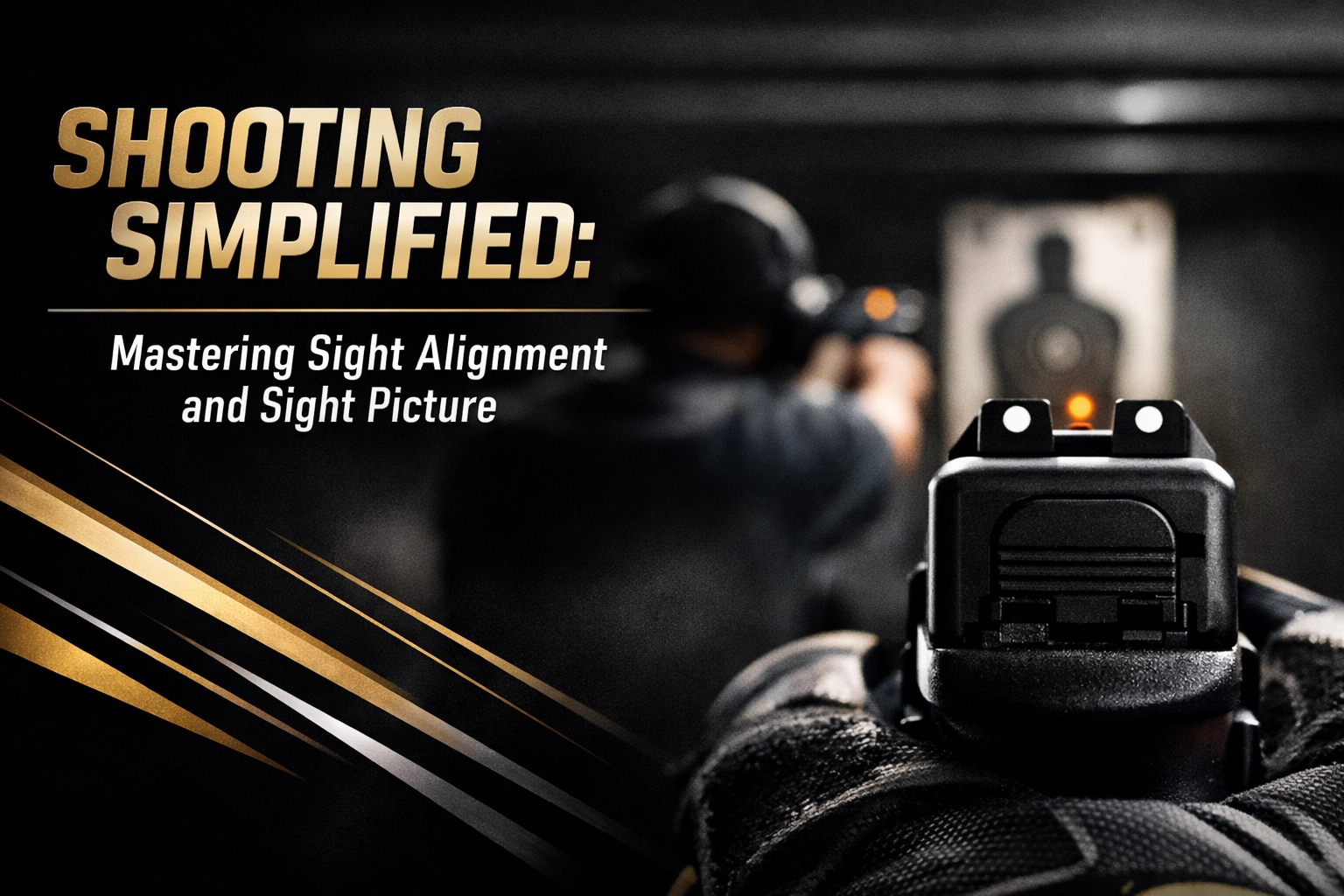
Welcome back to The Protector’s Perspective. I’m Chris Goemans, and if you’ve been following our Shooting Simplified series, you’ve already started building a solid foundation with grip and stance. This is the third installment of the series. But let’s be real: you can have the most rock-solid stance in the world and a grip like a vice, but if your sights aren't pointing where they need to be, you’re just making noise.
You’ve spent hours on the range. You’ve mastered your draw stroke, you’ve practiced your "sight alignment" until it’s reflexive, and you’ve finally navigated the maze of NY carry laws. You are prepared for the fight.
But what happens when the fight is over?

The transition from traditional iron sights to a Red Dot Sight (RDS) on a handgun isn't just a gear upgrade; it’s a paradigm shift. For decades, shooters were told to focus on the front sight while the target remained a blur. In a high-stakes encounter, this goes against every natural human instinct. When your life is on the line, your brain wants to look at the threat, not a piece of serrated steel an arm's length away.

Hey everyone, Chris Goemans here. If you’ve spent any time walking through Manhattan lately, especially near the "Crossroads of the World", you’ve likely seen the signs. They are bright, bold, and carry a heavy message: "Gun Free Zone."

Well-Taught, Well-Trained
Safety always comes first. We teach proper firearm handling to help prevent accidents and encourage responsible ownership.